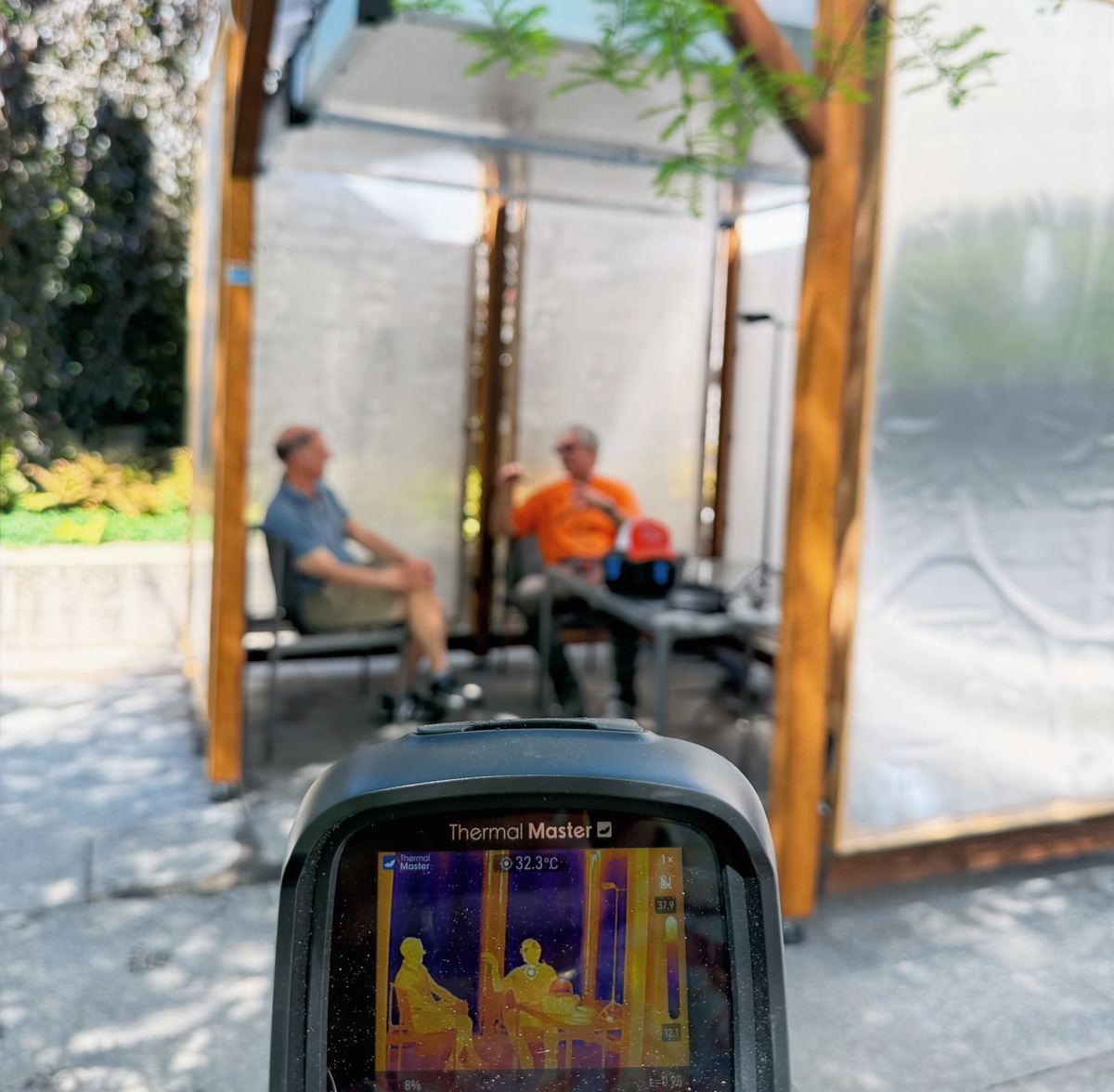
We cool people, not buildings. Chilled radiant panels deliver targeted comfort using 85 watts — a fraction of conventional HVAC — with no ducts, no plumbing, and no wasted energy on empty space.
"Cooling things, not buildings."
This FLIR thermal image captures one of our demonstration pavilions in operation. The cool radiant panel surface — invisible to the naked eye — is unmistakable in the infrared: a field of deep blue radiating cold into the occupied zone below. No air movement. No noise. Just physics.
Radiant cooling works because the human body exchanges heat with surrounding surfaces, not just air. A chilled surface overhead absorbs radiant heat from occupants the same way shade does — silently, efficiently, and without blowing cold air on anyone.
Explore Human Comfort Science ↗FLIR image taken at our Coolest Spot demonstration pavilion, Princeton University. Courtesy of Jyotirmoy Mandal.
Instead of conditioning an entire building, we place a chilled surface where people actually are. The panel draws heat from bodies by radiation — the same mechanism that makes standing under shade feel refreshing, operating continuously.
Clearly Cool panels mount above or beside occupied zones — a dining terrace, a farrowing crate, a stadium dugout, a transit shelter. Each panel cools its footprint. Deploy two, cool two zones. The energy savings scale with the precision.
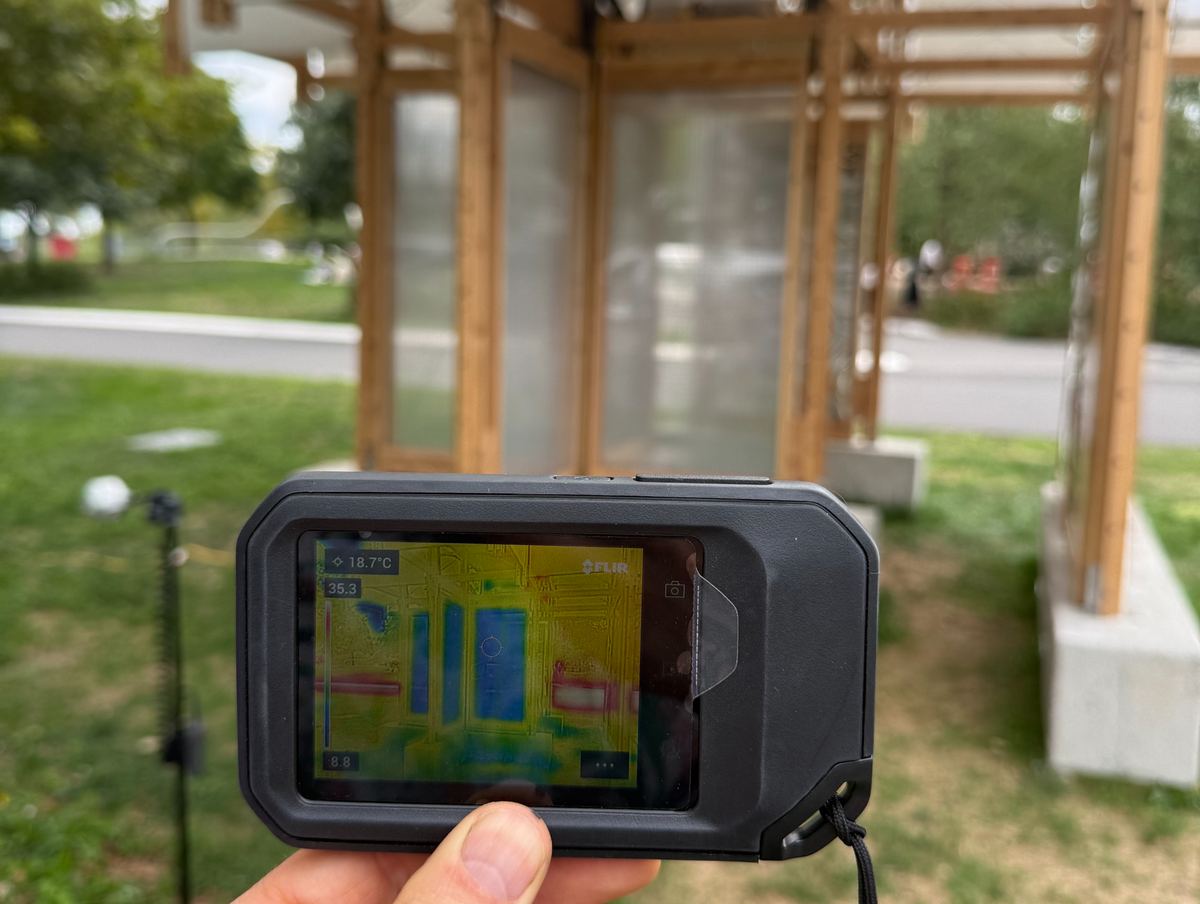
At 85 watts, the panel surface chills below skin temperature. Radiant heat from occupants transfers to the panel — exactly as your body radiates warmth to a cool window in winter. No fans. No drafts. No condensation risk when panels are kept above the dew point.
Learn about operative temperature and comfort →
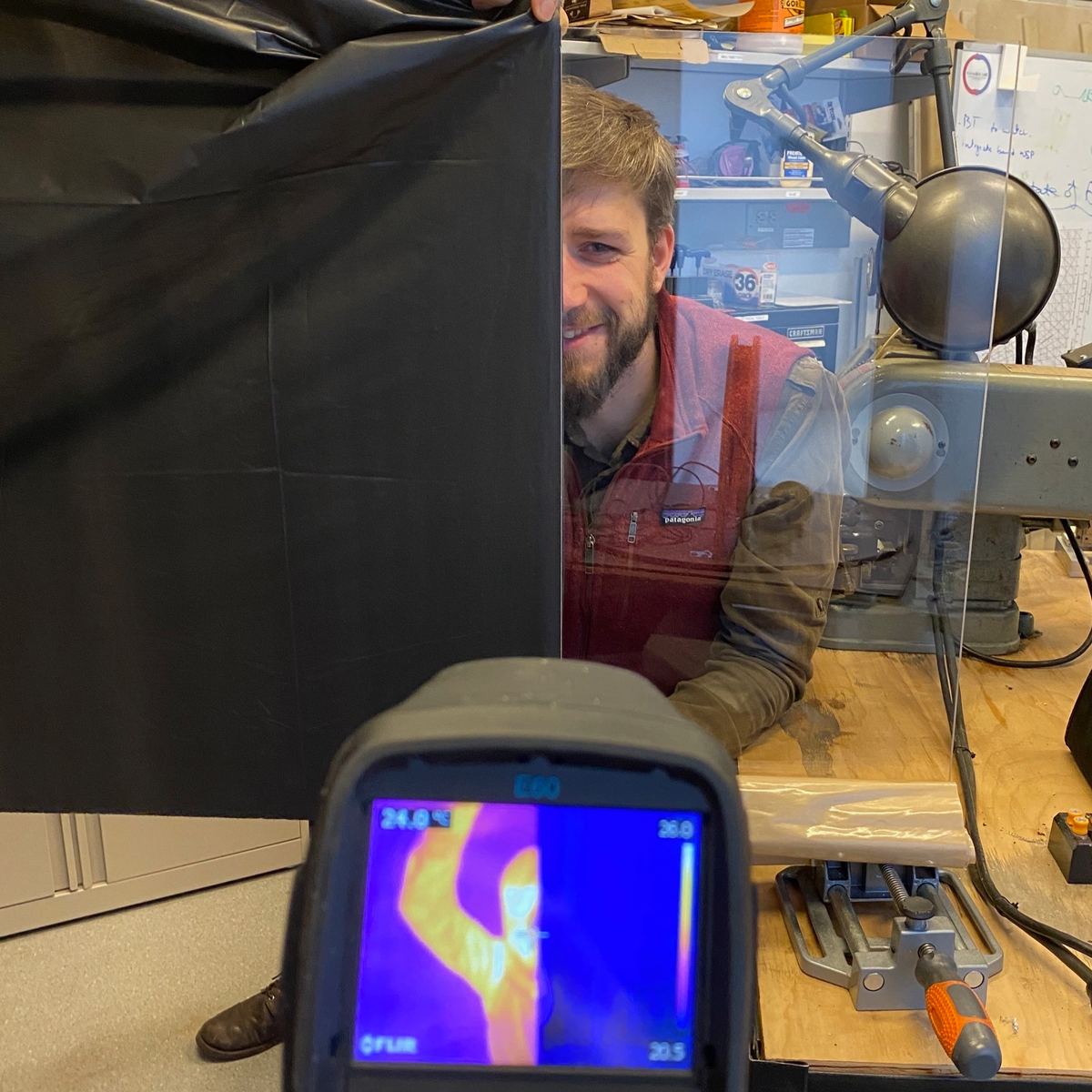
Standard 120V outlet. No plumbing, no refrigerant lines, no licensed contractor required. At 85W per panel, a modest PV array can run an entire installation off-grid — making our technology viable in places conventional HVAC never could reach.
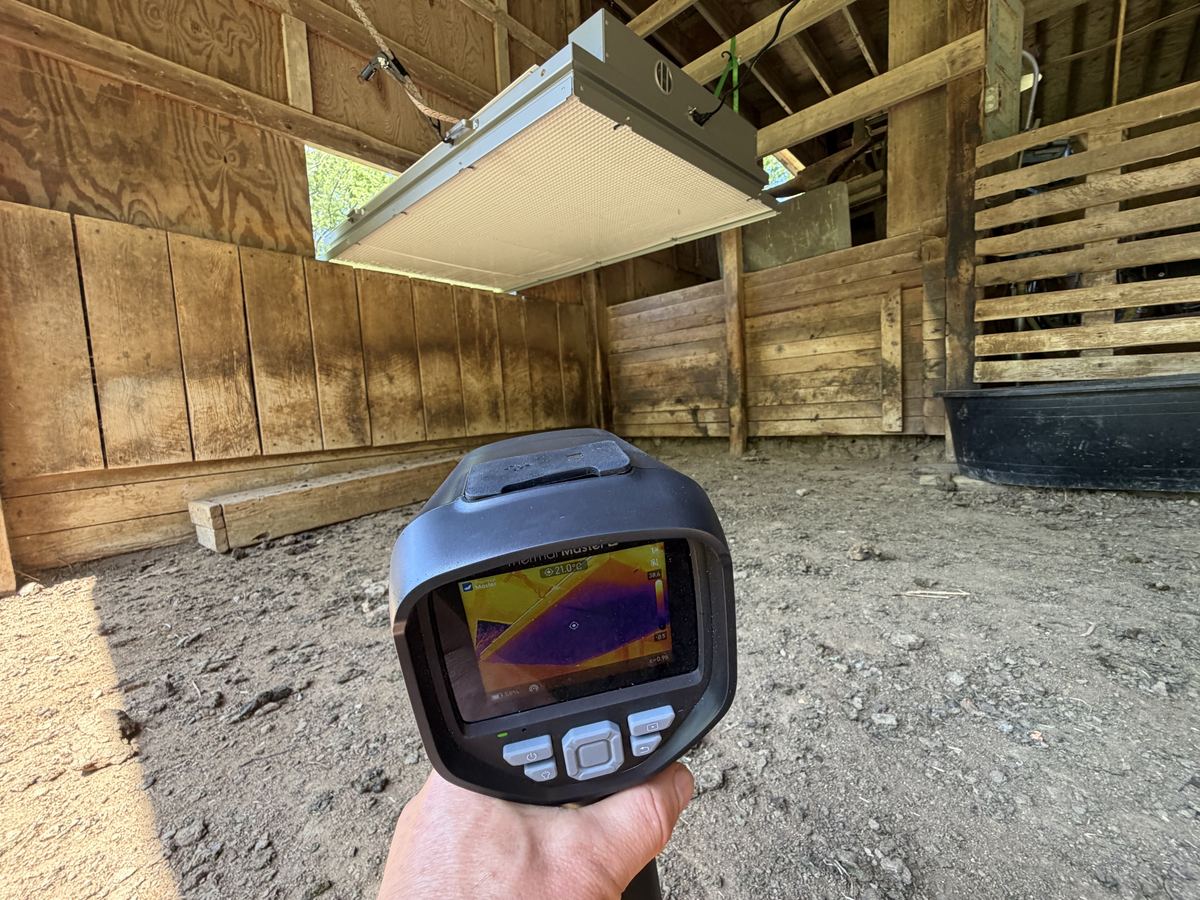
Radiant cooling works wherever a chilled surface can be placed overhead — indoors or out. The same core technology scales from a single dining table to an entire barn row.
Clearly Cool's technology grows directly from published research in thermal comfort, radiant systems, and building physics — much of it co-authored by our founding team.
Our team contributed to the science behind this interactive tool for exploring thermal comfort, operative temperature, and the role of radiant surfaces in perceived warmth.
Open the Tool →Teitelbaum et al. demonstrated how low-energy radiant cooling can extend human comfort envelopes — the scientific backbone of Clearly Cool's approach.
Read the Paper →Coverage of how targeted radiant cooling represents a fundamentally different approach to thermal comfort than conventional air conditioning.
Read the Story →How personal and targeted radiant cooling could transform the way we think about energy use in a warming climate.
Read the Story →Bloomberg feature on how radiant panels are being deployed in parks and public spaces to address the urban heat crisis.
Read the Story →Prof. Forrest Meggers' lab at Princeton — where much of the foundational physics behind Clearly Cool's panels was developed and validated.
Visit the Lab →A partnership between AIL Research Inc. and the CHAOS Lab at Princeton University — combining applied engineering with academic research in building physics.
Whether you're a producer, developer, municipality, or investor — we want to hear from you.
hello@clearly-cool.com